Cemiterio dos Prazeres
On the western edge of Campo de Ourique, Cemiterio dos Prazeres is a quiet city of cypress avenues, family mausoleums, public memory, funerary architecture, and open views over Alcantara, the bridge, and the Tagus.

A cemetery shaped like a small city
Cemiterio dos Prazeres was created in 1833, when a cholera epidemic forced Lisbon to rethink burial outside church interiors and crowded urban ground. It later became part of the municipal cemetery system, serving the western side of the city.
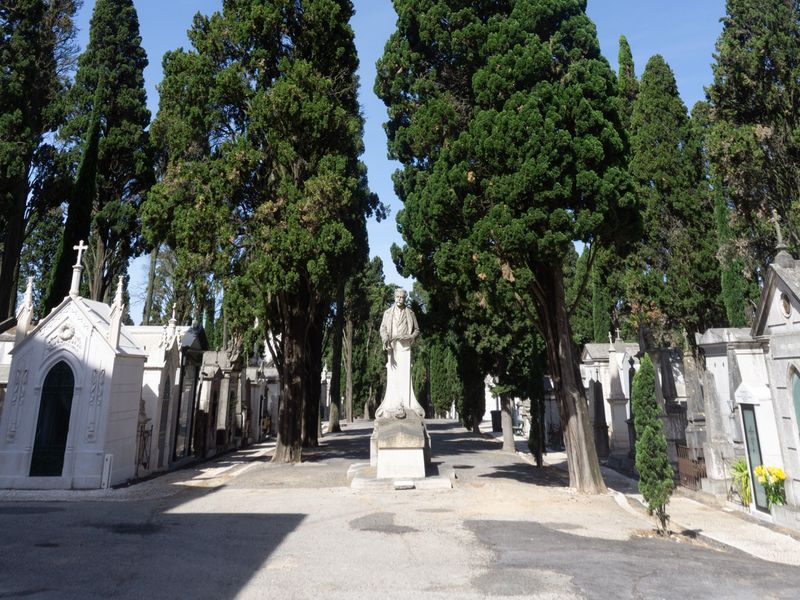
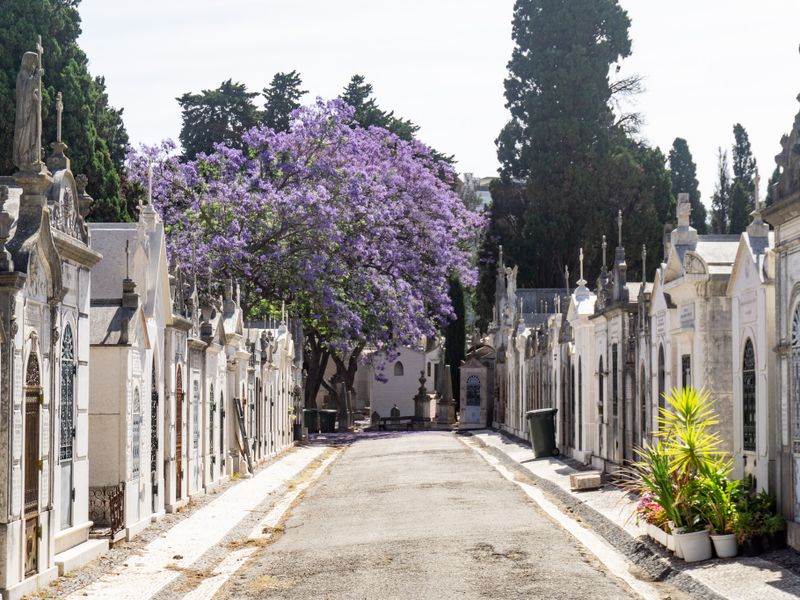
The cemetery sits beside Campo de Ourique and Prazeres, at a natural end point for a neighbourhood walk. Inside, the layout feels less like a single monument and more like a quiet district: avenues, crossings, family chapels, private mausoleums, small architectural gestures, and long lines of cypress trees.
That city-like quality is part of the experience. A visit is not about rushing to one tomb. It is about reading names, materials, symbols, family histories, and the way Lisbon's nineteenth-century elites turned memory into architecture.
Why it matters
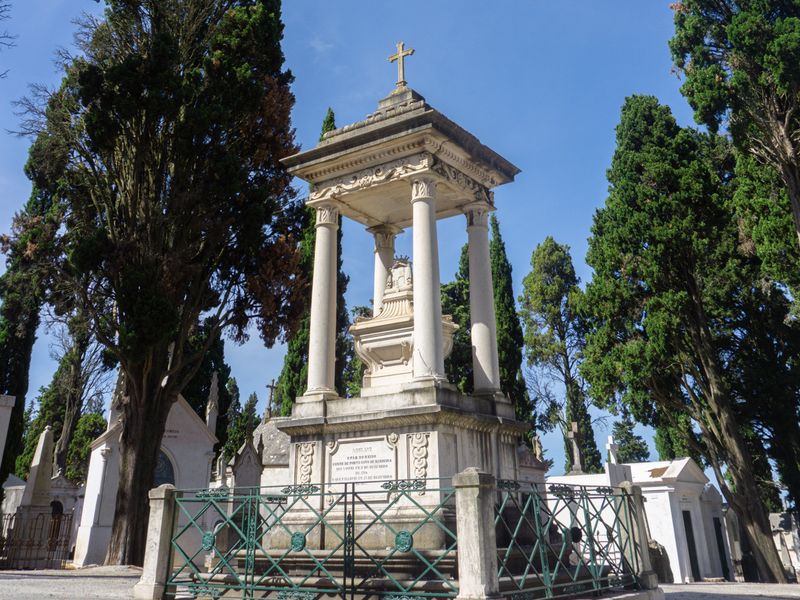
Prazeres is often described as an open-air museum because many of its mausoleums were commissioned from architects, sculptors, designers, and craftspeople. The result is a dense collection of romantic funerary art: stone carving, ironwork, stained glass, ceramic pieces, religious imagery, classical references, and Masonic or civic symbolism.
The best-known monument is the Palmela Mausoleum, connected with Pedro de Sousa Holstein, the Duke of Palmela. Sources commonly describe it as the largest private mausoleum in Europe, with a pyramidal form, underground crypt, and a scale that makes it feel almost like its own enclosed cemetery.
The cemetery also includes writers' plots, artists' areas, public service plots, and many individual family mausoleums whose details are easy to miss if you walk too quickly.
What to look for
Start with the main avenues and the cypress trees. Visit Lisboa notes the cemetery's old cypress collection as one of its defining features, and the trees give the whole place a vertical rhythm that matches the mausoleums.
Look for the chapel and museum collection as well. The chapel area is associated with funerary ritual objects, and municipal information notes the old autopsy room at the Capela dos Prazeres. Together, those spaces make the cemetery more than a landscape of graves: it is also a record of how the city organized death, ceremony, and public health.
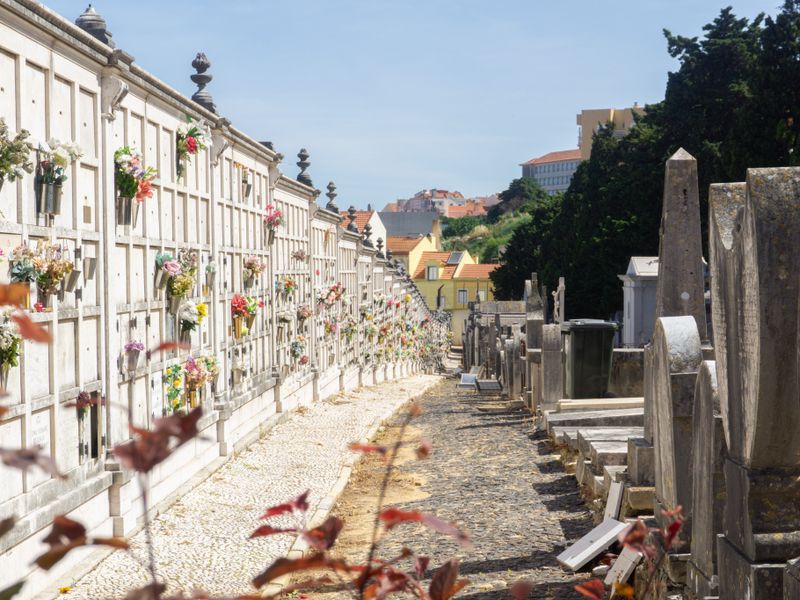
Towards the edge of the cemetery, the view opens over Alcantara, the 25 April Bridge, and the Tagus. That sudden sense of Lisbon outside the walls is one of the reasons Prazeres works so well as the western end of a Campo de Ourique walk.
How to visit
Use it slowly. Give yourself time to follow one or two avenues rather than trying to cover everything. If you are coming from Campo de Ourique, the cemetery pairs naturally with the market, Jardim da Parada, and the streets leading west towards the tram terminus.
Remember that it remains an active cemetery. Keep the visit quiet, avoid touching private mausoleums, and treat visible interiors as part of the site's fragile record rather than as displays to crowd around.
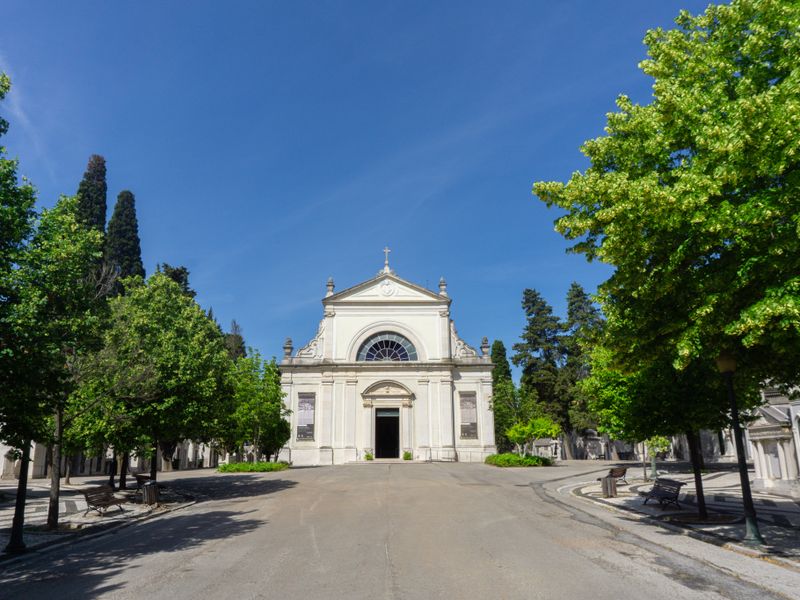
A quiet city of mausoleums
The family mausoleums give the cemetery its own urban landscape, with lanes, chapels, sculpture, and public memory.
Credit: campodeourique.com